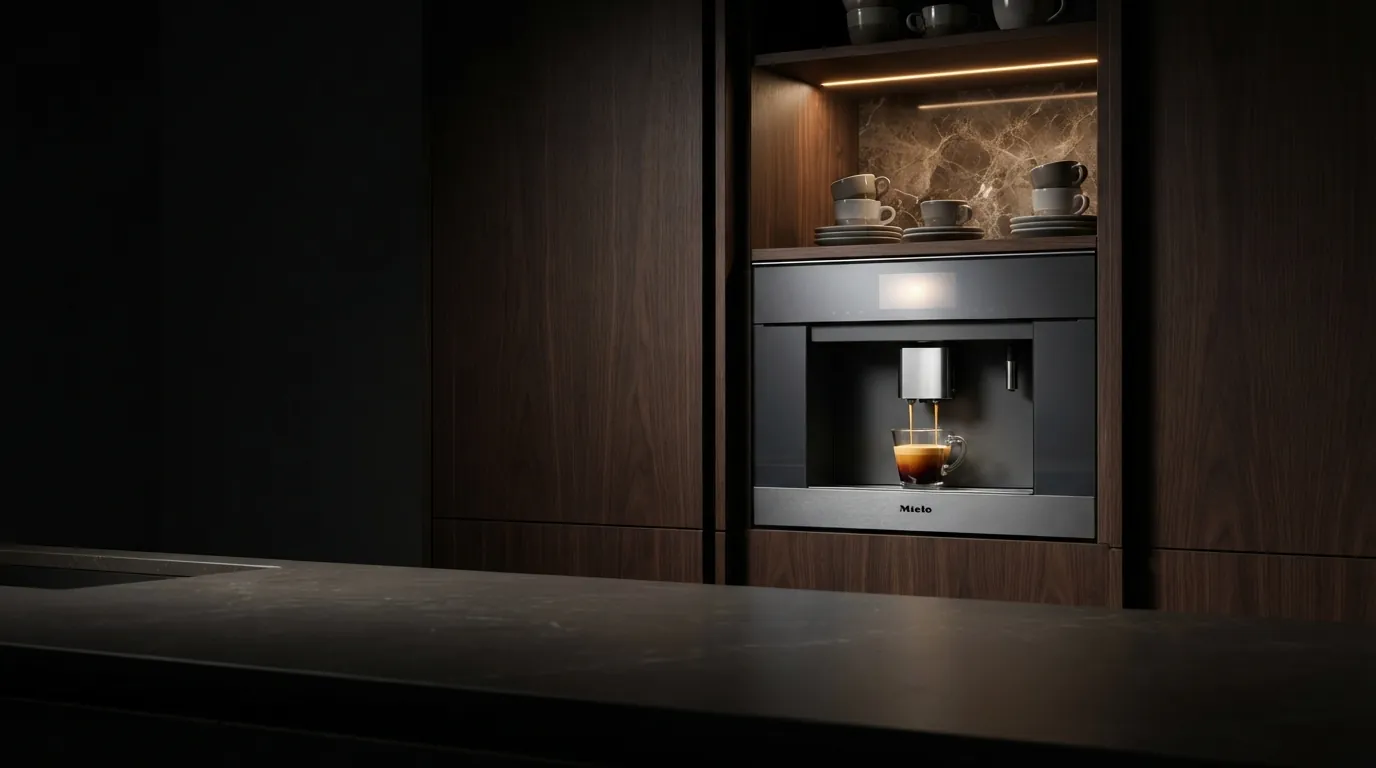
Built-in coffee and espresso systems are becoming a standard fixture in Houston’s remodeled kitchens, and they fail in ways a countertop machine never will — internal leaks behind the cabinetry, brew units that jam, water lines that scale up, and descaling cycles that will not complete. We work on the plumbed-in and reservoir-fed built-in systems installed alongside cabinetry, not portable countertop machines.
Because these units sit inside custom millwork, a leak is a bigger problem than the machine itself — we isolate the source before anything gets pulled out, and we quote the repair against the actual fault, not a blanket “replace the unit” estimate.
Built-in and plumbed-in coffee systems — the kind installed in a kitchen remodel or a high-end appliance suite — are where most of our coffee calls come from. A superautomatic machine with a grinder, a milk frother and a touchscreen has more failure points than a drip machine, and more of them are worth repairing. We work on Miele, Jura, Bosch and Gaggenau built-in units alongside the freestanding prosumer machines common in Houston’s newer builds.
Descaling is the most skipped maintenance item on these machines, and skipping it turns a $30 cleaning into a $300 pump or boiler replacement. We descale as part of every service call when buildup is present and can walk you through a maintenance schedule before we leave.
My espresso machine is not producing enough pressure – can you fix it?
Low pressure is almost always a failing pump or scale buildup blocking the boiler and group head. Both are repairable. We pull the machine apart, measure the actual pump output, descale the system if needed and replace the pump if it is genuinely worn — not just clogged.
Houston’s water hardness is above average, and it shortens the service interval on every built-in coffee system in the city. We descale as a matter of course on every call where buildup is present — it takes fifteen minutes and prevents the more expensive pump and boiler repairs that follow chronic scaling.