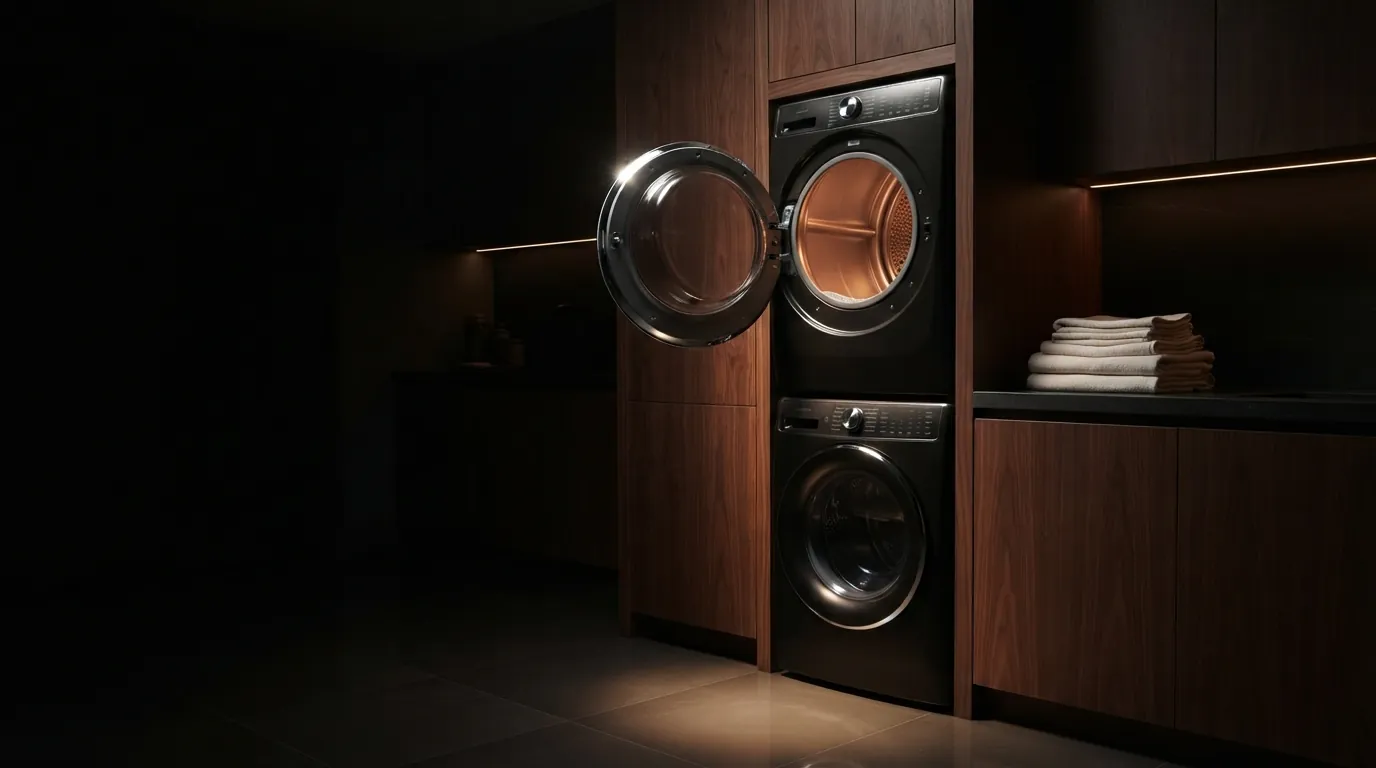
A dryer that runs but does not heat is usually a bad igniter or thermal fuse on gas units, or a failed heating element or thermostat on electric ones — all straightforward, same-visit repairs once we have the model in front of us. A dryer that takes two cycles to finish a normal load is a different problem, and it is worth taking seriously: a blocked exhaust vent is a real fire risk, not just an inconvenience.
We also fix drum belts, rollers and bearings behind the thumping and squealing noises, and door switches that stop a dryer from starting at all. Vent inspection is part of every service call — it is the single most common reason a dryer “stops working” that has nothing to do with the machine itself.
How often should a dryer vent be cleaned?
Once a year for most households, more often for larger families or homes with long vent runs. If cycles are taking noticeably longer than they used to, that is usually the vent, not the dryer.
Nine out of ten dryers that “take forever” have a restricted vent, not a failing machine. We check the vent path as part of every dryer call — a clogged flex hose or a bird-nested outside cap is a ten-minute fix that solves the problem without parts. If the vent is clear and the dryer still runs cold, we move to the heating element, the thermal fuse and the cycling thermostat.
If your dryer is hot to the touch on the outside, tripping the breaker, or shutting off mid-cycle, do not run it again before we check the vent and the thermal cutoff. Houston homes with long interior vent runs — common in larger houses — are especially prone to airflow restriction. We measure exhaust flow at the outlet cap as a standard part of every dryer call and clear the path before we leave.