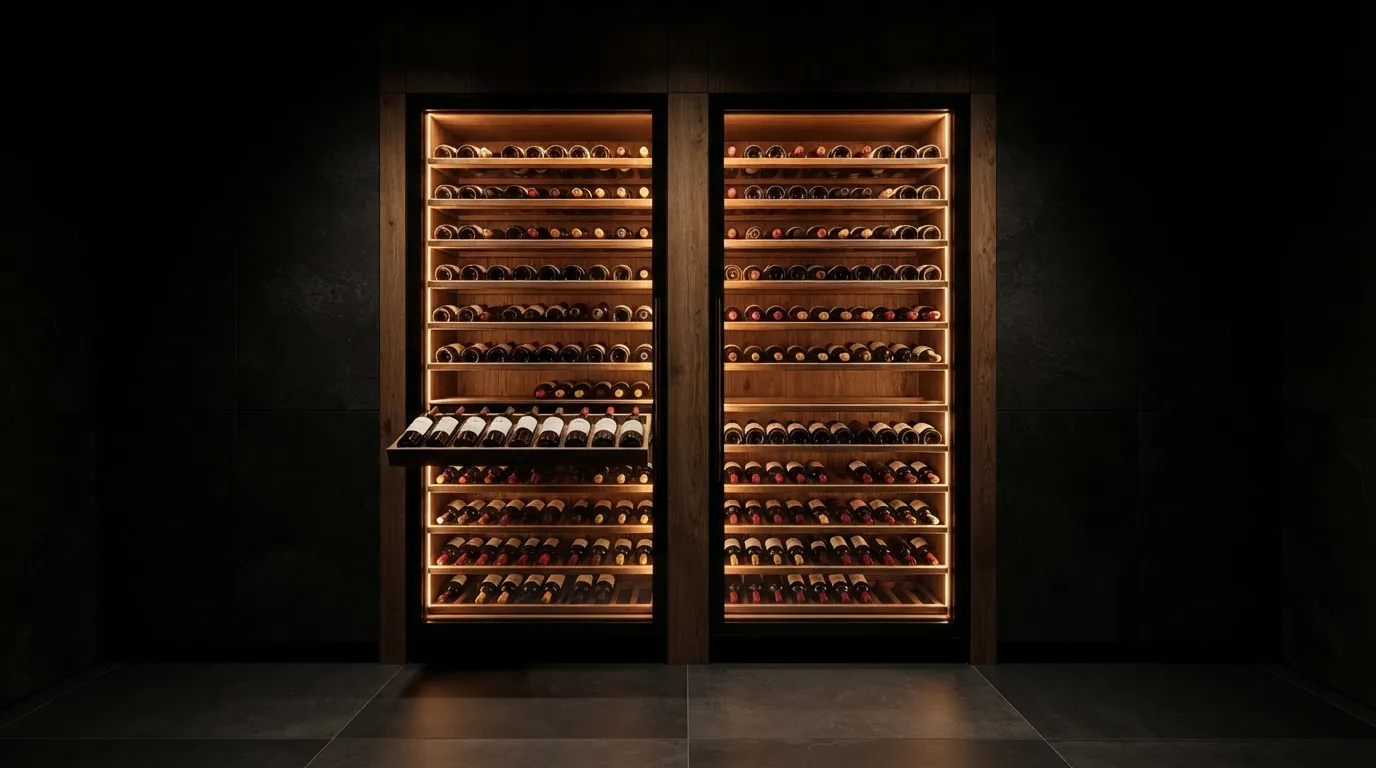
Wine and beverage coolers run on smaller, more delicate compressors and thermoelectric systems than a full-size refrigerator, and they are far less forgiving of a failing fan or a dying compressor — a few degrees off for too long can affect what is stored inside. We diagnose and repair both compressor-based and thermoelectric units, single and dual-zone, built-in and freestanding.
Most calls come down to a fan motor, a control board, a door seal that has stopped holding humidity, or a compressor start relay. Given how compact these systems are, an accurate diagnosis before ordering parts matters more here than on almost any other appliance we service.
Houston’s ambient temperature puts extra load on wine cooler compressors and thermoelectric cooling plates — a unit that runs without issue in a cooler climate may struggle here if it is placed in a room without good air circulation. We ask about the installation location as part of every wine cooler call, because sometimes the fix is repositioning rather than a replacement part.
We work on single-zone and dual-zone compressor-based units and on the thermoelectric models common in smaller undercounter configurations. Thermoelectric coolers fail differently — the cooling module and its fan rather than a compressor and refrigerant — and knowing which system you have helps us arrive prepared.
Is a compressor wine cooler better than a thermoelectric one for Houston?
For Houston’s heat, a compressor-based unit cools more reliably than thermoelectric when the ambient temperature climbs — thermoelectric efficiency drops as the room warms up. If your thermoelectric cooler struggles in summer, that is normal behavior for the technology, not a broken unit.
If your wine cooler is making noise, running constantly, or struggling to reach its set temperature, do not leave it running and hope it self-corrects. A small sealed system working too hard can fail quickly. Call us early, describe what you are hearing, and we will tell you the most likely cause before we arrive.